

38% Conversion Lift @ LG

As the lead product designer driving this initiative, my goal was to transform a transactional manufacturer website into a trusted, service-oriented ecosystem. By anchoring our strategy in deep user research and enterprise design systems, we achieved remarkable results:
+38% conversion rate across the redesigned path to purchase.
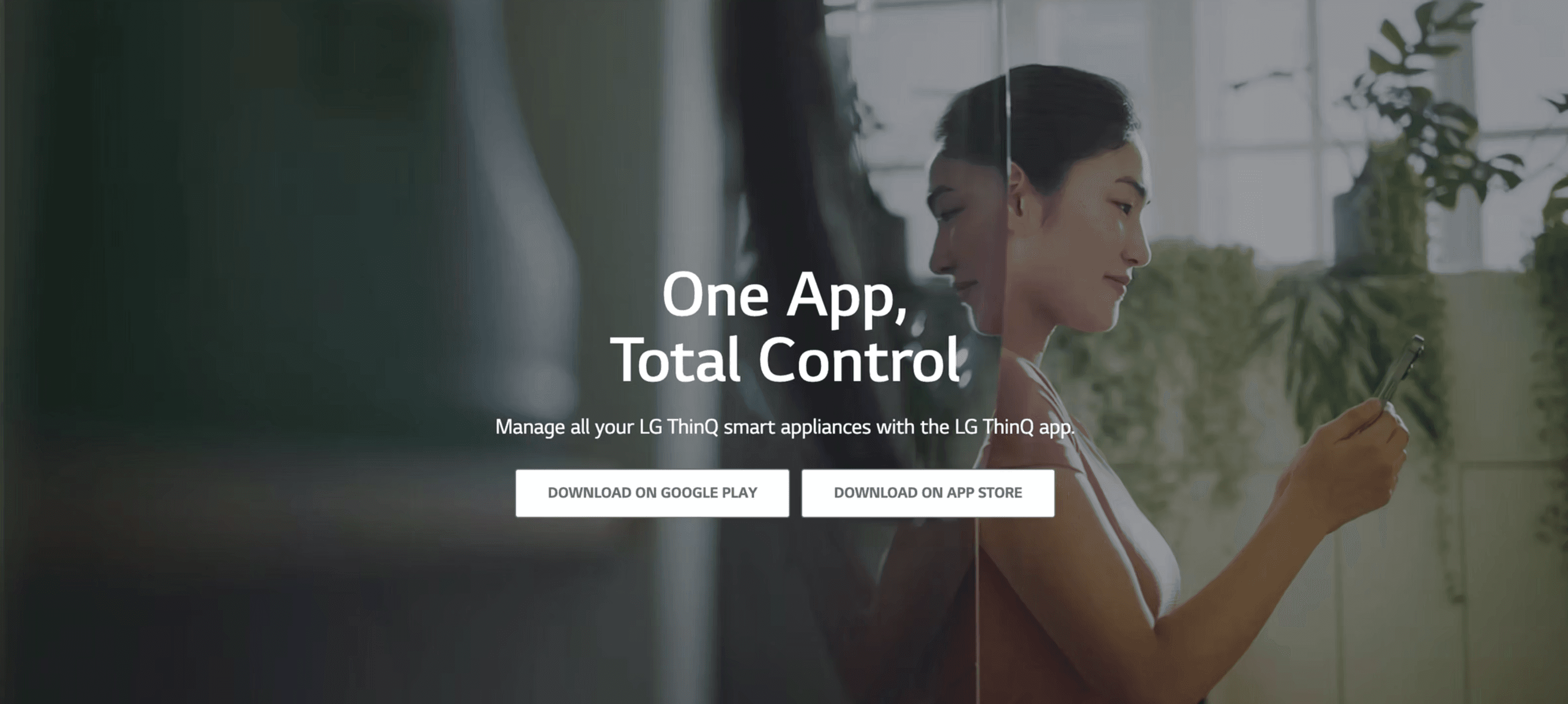
+43% increase in ThinkQ app download rates post-launch.
The Challenge: Disconnected Journeys and Feature Bloat
In large-scale enterprise environments, product teams often build solutions in isolation. At LG, this resulted in shopping, registration, and support flows that operated independently.
User research and journey mapping revealed that customers did not feel represented by rigid, traditional funnels. We uncovered five major pain points:
Limited Perspectives: Rigid shopping paths failed to account for real life scenarios like emergency replacements versus long-term home renovations.
Not Enough Context: Product detail pages focused heavily on internal technical specifications rather than practical, real-world use cases.
Overwhelming Complexity: Users experienced a "sea of sameness" across product catalogs, forcing them to rely heavily on third party review sites or manual spreadsheets to make sense of options.
Salesy Jargon: Heavy marketing terminology alienated buyers looking for straightforward, transparent guidance.
Fulfillment Anxiety: Hidden value propositions regarding delivery, warranties, and installation created last-minute stress at checkout.

Pro Tip & Industry Logic: Design for Real Scenarios, Not Just User Personas
To solve these systemic issues, we moved beyond flat demographic data and built our architecture around distinct user mindsets:
Nathalie ("The Distress Buyer"): Needs a fast, reliable replacement immediately after an appliance breakdown without straining an unexpected budget.
Tom ("The Upgrader"): Has a long replacement cycle, values high quality, and spends significant time researching details and cross-referencing reviews.
Danielle ("The Dream Home Renovator"): Juggles multiple appliance categories and needs assurance that all products fit together stylistically and functionally.
By mapping these mindsets to our design system components, we ensured that the interface dynamically met users where they were in their decision making process.
Key Solutions and Strategic Execution
We overhauled the core shopping and app registration touchpoints to build trust and reduce cognitive load:
Guided Discovery via Questionnaires: We introduced lightweight 3-to-6 question interactive finders on category pages, instantly narrowing down options into top three tailored product recommendations.
Frictionless Comparison Tool: Instead of forcing users onto a separate page, we implemented an overlay comparison tray accessible from any product card, letting shoppers evaluate key specs side by side without losing their place in the funnel.
Contextual Shoppable Rooms: We bridged lifestyle inspiration and commerce by creating interactive, hot-spotted room environments that showcased products in authentic home settings.
Transparent Bundles and Clear Value Props: We moved critical fulfillment details like free delivery, haul away services, and financing options upfront into product detail pages and persistent checkout bars to eliminate last-minute cart abandonment.
Collaboration and Delivery
Scaling this transformation across enterprise teams required rigorous alignment. All UI screens were componentized within our MUI library, built out in full breakpoints, and annotated directly inside Jira-connected Figma files to ensure seamless translation from design tokens to front-end development.